There are many regions in the world where governments change rules about the internet based on their politics. They can spread information about what is happening under a tyrant regime in their country. They can share all about the human rights violations in their country without the authorities knowing about it. That also means that people would start to become more inclined to carry out their normal discussions through private networks.
Never Share Personal Information
Forums play a crucial role in shaping the dark web’s social landscape, enabling users to exchange knowledge, share security advice, and discuss market reputations. Dread is arguably the most prominent forum, likened to Reddit but within the dark web. It hosts active discussions about market updates, hacking techniques, and security tips, with a community that actively moderates content to minimize scams. The Hub is another well-established forum offering extensive guides and support for newcomers and veterans alike, covering everything from vendor reviews to operational security.
Using A VPN For Additional Security
Yes, if you’re using tools like Tor, a VPN, and avoiding suspicious links, these search engines can be safe when used responsibly. It is also smart to avoid logging into personal accounts while using Tor. Many users even choose dedicated devices or virtual machines to explore the dark web, reducing the risk of malware infecting their main systems.
Tor Links
Due to its extensive inventory and reputation for reliability, Brian’s Club has maintained a significant presence on the dark web. Quality and validity of the data it provides justify its higher cost over other marketplaces. The platform’s popularity continues to grow, attracting both new and returning customers.
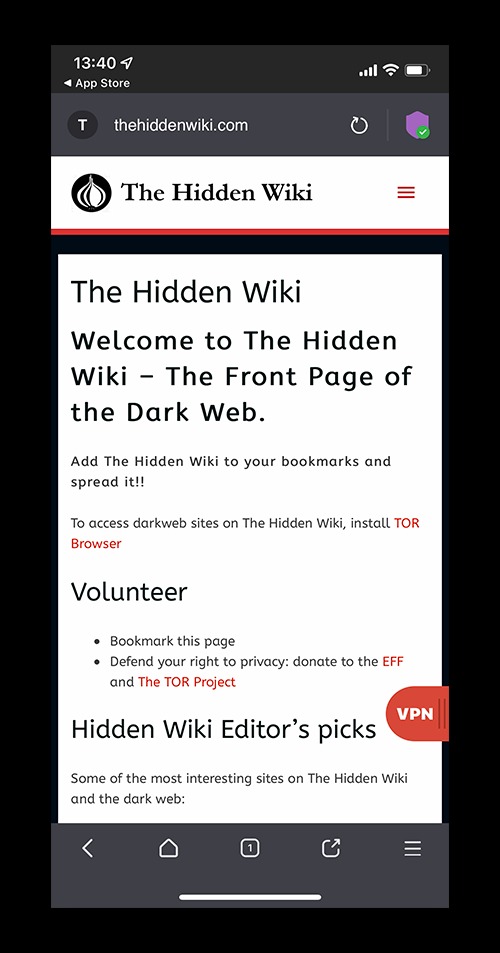
The Hidden Wiki

For more guidance, our detailed post on How to Visit the Top Dark Web Sites in 2025 explains practical steps you can take. Still, since they exist within the dark web, there is a high chance that malicious entities have co-opted one or more for illegal activities. Thus, staying connected to a VPN when you access these sites is vital. Since you cannot access a library of dark web links using the regular Internet, you can check out platforms dedicated to indexing these sites, like The Hidden Wiki.
If the websites you visit use tracking scripts, third parties can monitor you. Also, refrain from putting any personal information on the dark web. Accessing the dark web is legal in itself; the nature of the activities you engage in ensures it stays that way. Criminals prefer the dark web because it offers anonymity like never before. But as long as you don’t knowingly engage in illicit activity on the dark web, you are completely fine.
Acronis Cyber Protect Cloud: New Version C2505
To explore it, you need special tools like the Tor browser (short for The Onion Router) and search engines designed specifically for the dark web. The exposure of customer data on the dark web can have devastating consequences for small enterprises. Stolen information, such as credit card details and personal identifiers, is frequently traded on dark web marketplaces, leading to financial fraud and identity theft.
Activists and government critics prefer to remain anonymous, fearing repercussions if their identities are revealed. Besides, victims of crime may want to hide their identities from their perpetrators. Nonetheless, if whatever you do is deemed illegal in your country, you can get into trouble.
Which Is The Best Laptop For Cyber Security Course?
But for the average user, it is not the best choice for safe exploration. It serves as a reminder that while dark web search engines can be powerful tools, they are not all created with safety in mind. You enter a query, and the engine returns onion links with clear descriptions.
These groups often operate on a ransomware-as-a-service (RaaS) model, renting their tools to affiliates in exchange for a share of the profits. As a user or cybersecurity professional, approaching these marketplaces demands utmost caution, thorough knowledge of operational security, and constant awareness of legal boundaries. Understanding both the benefits and dangers ensures safer interaction and more informed decision-making in an ever-changing digital environment. Although dark-web marketplaces utilize technologies like Tor and I2P to enhance anonymity, these methods are not foolproof. Law enforcement agencies continuously improve their ability to trace transactions and monitor marketplace activity.
But onion sites can also serve nobler goals, like providing access to information and independent journalism in countries with government censorship. The deep web is the part of the internet you can’t access through search engines like Google and Bing. Also referred to as “non-indexed” content, it’s any content hidden behind some kind of access control such as a log-in or code word. It contains 7,500 terabytes of information, compared with only 19 terabytes of information in the “surface” web. To look at it in a different way, it makes up between 90% and 95% of the internet.
- While many dark websites appear sketchy, The New York Times is an exception.
- Simply put, onion sites are websites that are hosted on the Tor darknet that use the “.onion” top-level domain instead of “.com,” or “.gov” for example.
- It can’t provide solutions should users encounter issues while using the website.
- In some ways, dark web websites offer more browsing freedom, but the lack of safeguards can leave you exposed to hackers, malware, and other online threats, like viruses or other malware.
- To help you make educated choices about cybersecurity to keep you (and your data) safe and secure, by providing detailed, accurate, and practical information based on thorough testing.
The Darknet is a subset of the Internet operating over encrypted, anonymous overlay networks that require special software like Tor, Freenet, or I2P. You’re only scratching the surface when you use the Internet for daily activities—reading news, managing finances, running businesses. Search engines like Google, Bing, and Yahoo can access just about 4% of the web.
The Hidden Wiki is accessible primarily through specialized anonymity networks like Tor and, to some extent, I2P (Invisible Internet Project). These tools enable users to connect to .onion or .i2p sites that exist outside the conventional internet infrastructure. Tor, the most widely used, anonymizes traffic through layered encryption and random routing, providing a secure way to access dark web directories safely. I2P, though less popular, offers similar peer-to-peer anonymity with a focus on internal network services. Together, these technologies facilitate private, censorship-resistant access to hidden content, with the Hidden Wiki acting as a trusted directory to navigate this complex landscape. Without these tools, neither Google nor any surface web browser can reach these secure, hidden parts of the internet.