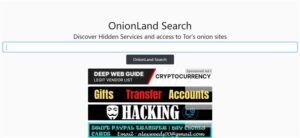
The starting point for many people’s journeys into the darker corners of the Internet, “the Hidden Wiki” is a vast repository of many of the more popular dark websites on Tor. It can be a bit of a Wild West, but if that’s the case, then The Hidden Wiki is like a frontier town, where there’s at least some semblance of order. Darknet is your best source for the latest hacking tools, hacker news, cyber security best practices, ethical hacking & pen-testing. Many free VPN providers lack basic security features and track your online activity, so they don’t offer much privacy. That’s why it’s important to verify links through trusted directories and proceed with caution.
However, over the years, the Hidden Wiki name has become controversial. Because it’s such a well-known brand, countless clones and fake versions have appeared across both the surface web and the Tor network. These copies often contain outdated links, dangerous redirects, or even malware-laced pages. Some are created purely to trick users into clicking harmful or phishing links under the illusion of legitimacy.
Avoiding Malicious Links
- The government has shut down major darknet drug marketplaces in the past, but they were quickly replaced by new ones.
- These markets are hidden from search engines and require special software, such as the Tor browser, to access.
- In a world where digital privacy feels as rare as a unicorn, the dark web offers a peculiar sanctuary.
- Rather, just sellers and site operators — the latter of which apparently includes those involved in dark web market affiliate marketing schemes.
- Tor, the most widely used, anonymizes traffic through layered encryption and random routing, providing a secure way to access dark web directories safely.
For instance, in the UK, any book older than 70 years old (past the date of the author’s death) is no longer subject to copyright restrictions. This means you can safely download older manuscripts and other public domain works. Torch is the oldest and largest .onion search engine with more than 1 million .onion sites indexed.
🔍 How To Know If A Dark Web Link Is Real
While it might appear tempting to venture into the dark web, it’s crucial to understand that the risks here are far more severe compared to the deep web. Therefore, if you do decide to explore it, exercise extreme caution. No user names are tied to actual identities, and no moderation like one may find on Reddit. Users leverage these platforms to organize protests, whistleblow, share survival guides, or share files P2P.
A Quick Warning About Onion Sites
Yes, governments can still monitor onion sites if they really want to. Local offices frequently monitor suspicious activities that involve their jurisdictions, so authorities might be closer to your anonymous communication than you know. Since most Tor websites are non-indexed and unregulated, the probability of scams is much greater on the dark web. Malicious actors can prey on unsuspecting users without leaving much of a digital footprint on Tor, so it’s often just a matter of time before you run into one. ZeroBin is a minimalist paste-bin tool that allows users to share text securely and privately on the Tor network.
Why Is Tor So Slow?
Many search engines now incorporate features like encrypted connections and advanced filtering options. In 2008, a significant breakthrough occurred with the creation of Tor2web. This proxy application allowed you to access .onion sites using standard browsers.

Domain Seizure

This feature is particularly useful for researchers and marketers who need to present complex data in an engaging format. PageOn.ai’s intuitive interface makes it easy to navigate and utilize these tools, ensuring a seamless user experience. A VPN also helps you bypass geographic restrictions and protects you from potential cyberattacks.
Does The CIA Have An Onion Site?

This benefit is particularly valuable for researchers exploring the invisible web, as it simplifies the communication of findings. Use the AI chat feature to refine and personalize your presentation. This tool provides suggestions and enhancements, allowing you to create a polished final product. Agentic empowers you to turn abstract ideas into visually compelling presentations. By leveraging AI-driven content generation, you can create high-quality materials that captivate your audience.
Sci-Hub gives access to millions of scientific papers, mostly ones from behind paywalls. However, due to copyright infringement, Sci-Hub is considered illegal and banned in many countries. Pastebins are text sharing services, useful for sending and sharing large snippets of code or text. ZeroBin offers an extra secure version of this service by only encrypting and decrypting text in the browser, meaning their servers have no knowledge of what is passing through it. One of the most popular ways to get around the dark web is not to use a search engine at all.
Although the underground internet world is rife with everything bad, it also hosts positive elements. Facebook is aware of attempts by many governments to restrict access to a tool that allows strangers across the web to talk and collaborate freely. While its .onion address doesn’t make it much easier to maintain an anonymous account, it does make Facebook more accessible in places where it’s censored. The internet’s favorite alternative to Google made a name for itself by not logging your search activity yet still providing decent results.
Daniel’s Hosting specializes in anonymous hosting services optimized for Tor sites, providing secure environments and DDoS mitigation. OnionShare is a popular open-source tool that allows users to share files securely and anonymously via Tor, widely used by activists and journalists for confidential document distribution. The Tor Project’s official onion site offers secure downloads of the Tor Browser and developer resources, helping users access and contribute safely to the Tor ecosystem.
To appreciate why some users turn to the Hidden Wiki rather than Google, it’s important to understand the distinction between the surface web and the deep web. The surface web consists of all websites indexed by traditional search engines like Google, Bing, or Yahoo. This includes sites with publicly accessible content, such as news portals, blogs, and social media platforms. In contrast, the deep web encompasses parts of the internet not indexed by standard search engines.