Roger Kimball later upped the ante, alleging that the professors of the 1980s were former student protesters. Frustrated by the failure of their movements to destabilize American society, Kimball claimed, they channeled their discontent into “politically motivated” fields like queer theory or African-American studies, said to be inspired by “postmodern” Continental thinkers like Michel Foucault and Jacques Derrida. The IDW figures were hardly the only public intellectuals critical of the rise of illiberal progressivism in academia, social media, and mainstream journalism. Numerous liberals who were not a part of the IDW coterie, such as New York magazine’s Jonathan Chait, the Atlantic’s Anne Applebaum, and Canadian critic Phoebe Maltz Bovy were concerned about the phenomenon at the time.
Share The Intellectual Dark Web Podcast
This thirst explains how Carlson dismissed those caring about Oct. 7 as being obsessed with “foreign” matters before traveling to what seems like every country in the world to extol their virtues, fictional or otherwise. This thirst explains how Johnson, a Christian husband and father, embraced and emulated Andrew Tate, a Muslim pimp and self-professed abuser of women, before defending himself by misappropriating a Bible verse. This thirst explains how Candace Owens went from being an immovable supporter of Israel to one of its most enthusiastic (and spectacularly ignorant) critics seemingly overnight, regurgitating the same antisemitic Wikipedia articles that were available while she was flying to Israel to celebrate the opening of the U.S. In recent years, a group has emerged that, while existing outside of the mainstream, represents the antithesis of the intellectual dark web.
The Policemen Of Cultural Appropriation
The extensive research employed in developing LIWC motivated us to use it in our methodology. In our work, we employed LIWC to analyze each word of an input text automatically, attributing it to a psycholinguistic class. Then, it calculates the overall frequency of each one of its categories in the input text.
Also, he supports the idea of “various Chinese nations,” so in Sichuan, there’s a Basuria, in Hubei a Jingchuria, in Guangdong a Cantonia… It’s ridiculous, isn’t it? The conditions for constitutionalism come down to the situation in Washington. As Marx would say, they’re the big landlord, the big capitalist… It would be like Marx establishing a Jewish state on the Rhine after a Thousand-Year Reich… The truth is that all the methods that hold China together would have to be torn apart to implement constitutionalism. In order to carry out constitutionalism, there would have to be a complete refutation of Leninism… Like the Israelis, the Chinese might escape from slavery only to find themselves wandering in the desert.
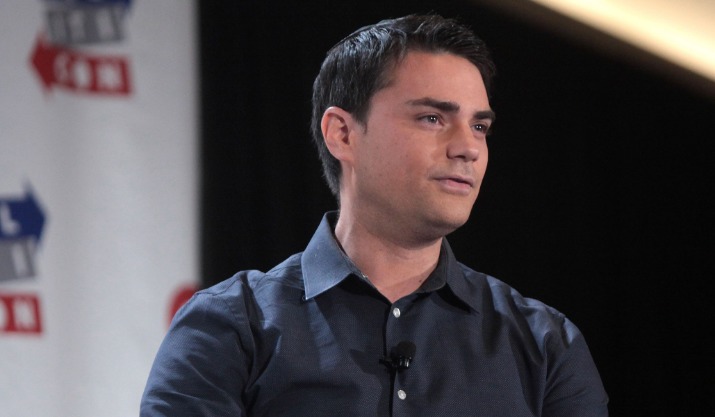
After the 2020 US presidential election, in response to statements by some of those considered members of the IDW that the election was stolen, Harris was quoted as saying he was “turning in his imaginary membership card to this imaginary organization.” Just below the surface of the roiling debates about how and why our country got into its current predicament, a radical movement is afoot. Sometimes called “the intellectual dark web,” it lives largely on the internet, but it isn’t a site or a channel, it’s a collection of thinkers (and it’s not the dark web of anonymous cybercrooks you’ve probably heard of).
As long as the dark web appears unaware of or uninterested in their affinities with these not-too-distant predecessors, we rarely hear explanations of how political correctness actually gains its supposed influence. Instead, we hear decades-old warnings simply repeated as if no time had passed. One need not doubt that some of the dark web’s critiques are made in good faith and based on valid interpretations of social science data. Progressives and leftists can and should deal with these claims on their merits and faults, both in moral and empirical terms. But they should not indulge the intellectual dark web’s veneer of novelty or appeals to transpolitical reason. These thinkers ought not to be allowed to pretend that its ideas are, historically speaking, anything other than conservative.
The Saga Of The Intellectual Dark Web And Its Canceled Book, Now Republished
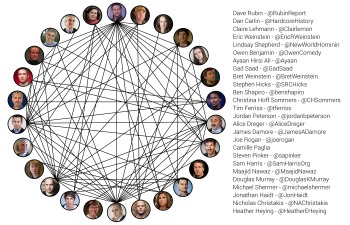
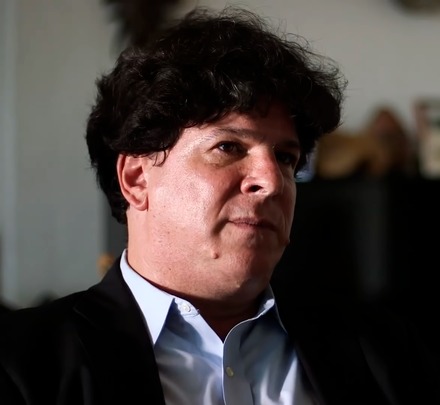
The intellectual dark web (IDW) is a loose affiliation of academics and social commentators who oppose what they perceive as the influence of left-wing identity politics and political correctness in higher education and mass media. The term “intellectual dark web” was coined, almost tongue-in-cheek, in early 2018 by Eric Weinstein, a mathematician, manager at Thiel Capital, and op-ed writer, and was meant to recognize a network of “renegades” in academia and media who reject identity politics in the name of unhindered dialectic (“free speech”). The group includes the likes of Islamophobic blogger and neuroscientist Sam Harris, former Breitbart editor Ben Shapiro, failed libertarian comedian Dave Rubin, and Jungian clean-your-room guy Jordan Peterson. On social media and chat forums, IDW often means “Intellectual Dark Web.” It refers to a loose grouping of intellectuals, writers, and commentators who engage with controversial ideas often sidelined by mainstream academic and media institutions. Coined by Eric Weinstein, the term captures the network’s self-perceived role as dissenters who challenge conventional discourse. Key figures often mentioned in this context include Jordan Peterson, Sam Harris, Ben Shapiro, and Joe Rogan.
Videos All Videos
But in various forms throughout the different public platforms of the “intellectual dark web,” one finds countless repetitions of the notion that leftist college professors armed with dangerous theories from the Old Continent are turning generations of young progressives into enemies of liberal democracy. In some versions of this refrain, the dark web goes further than the neoconservatives of decades past, whose paeans to traditional college curricula often had little implications outside the campus walls. The implication is that zero-tolerance prohibitions in many newsrooms, classrooms or on social media that forbid dissent (or sometimes, even discussion) on these subjects has contributed to some once-reasonable people going down conspiracy theory rabbit holes.
The Intellectual Dark Web: A History (and Possible Future) Kindle Edition
The IDW started and prospered as an intellectual movement to counter some serious reality bending that was going on. Of course, we can’t expect the IDW itself to have all the answers and the final truth (there’s no such thing). But I think the IDW has been and will continue to be, with other names and leaders, part of the ongoing dialectic evolution of our society. If the IDW ever really existed as anything more than a catchy, not-quite-serious brand name for an informal intellectual community, there is little doubt that it no longer does. A recently published short book by University of Sydney lecturer Jamie Roberts that charitably examines the IDW and its contributions to political dialogue, The Way of the Intellectual Dark Web, refers to it in the past tense. Onetime IDW fellow traveler Christopher Rufo wrote its obituary a year ago, arguing that the IDW fell apart because some of its members found Trump too icky and orange, some were unwilling to part ways with establishment science on COVID, and most of the rest lacked Rufo’s appetite for using political power to vanquish perceived enemies.
Associated Content
The intellectual dark web is perhaps a silly name for the group of thinkers it describes, but the search for a novel term does point to the radical transformation of American politics in our current moment. Donald Trump’s election has set off a chain reaction that has caused a great many Americans to rethink their ideological commitments and the place of those commitments within the broader society. For the people like Harris, Peterson, Rogan, Rubin, Sommers, Shapiro, Maher, and Weinstein, the noxious effects of political correctness on American society was the central lesson to be drawn from this recent history. And if the often glowing portraits of the dark web in publications like The New York Times and The Atlantic are any indication, or Peterson’s appearance at this year’s Aspen Ideas Festival, many liberals seem to agree. But though these figures believe their discovery has led them to form the basis of a new intellectual center in this changing context, recent history suggests their ideas may more likely find a home on the right. The intellectual dark web does not only recycle conservative theories explaining our supposed wave of left-wing irrationalism.
- “The book was then investigated and it was determined that it could not return to sales in its current form.”
- Henry Farrell is a professor of political science and international affairs at George Washington University.
- The extensive research employed in developing LIWC motivated us to use it in our methodology.
- Not surprisingly, the IDW’s slide into crankism has coincided with a slide into Trumpism—or anti-anti-Trumpism pushed to degree where it becomes indistinguishable from Trumpism tout court.
- Indeed, it was Rubin’s obsequious flattery—now mostly reserved for MAGA and DeSantis stans—that made his show an attractive platform for people like Harris and the IDW in the first place.
- The interesting thing, though, is having been effectively evicted from the left, we ran into all sorts of other people who we thought might be a bit right of center, who it turned out were actually also left of center and had also been similarly evicted and then misportrayed.
A teacher has no reason to teach if they are unwilling to learn from their students. The filter-bubble emanating from the IDW is a consequence of 20th century academia with its back against a wall. The price paid is in actual violence threatened by disturbed ideologues against truly progressive outlets for growth. Similarly, Sam Harris, a “New Atheist” and IDW apologist, has long opposed Islam on the basis of what he perceives to be a causal link between belief and behavior.
Can We Prevent Aging? Eric Topol On Genes, Lifestyle, And AI In Healthcare
The model is trained for five epochs with 512 as the max input size of tokens, the standard maximum BERT-like model implementations, and a batch size of 16 entries as the maximum allowed due to resource restrictions. Other parameters are the default of the HuggingFace’s trainer,Footnote 9 representing standard values. We use the CLS token output to capture contextual embedding representations for all entries of the balanced dataset sample. BERT represents a sentence as a sequence of hidden states, which must be reduced to a single vector for downstream tasks. Therefore, BERT prepends a CLS token (short for “classification”) at the beginning of each sentence and uses a more straightforward method of taking the hidden state corresponding to the first token.
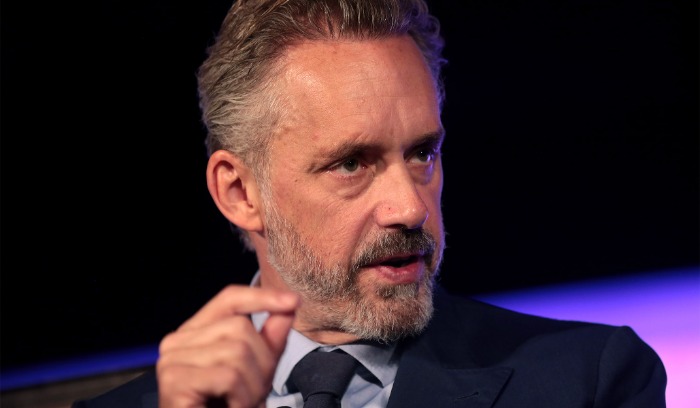
I’m skeptical that the left knows what to do, I’m very skeptical of what the left advances in terms of policy proposals, but in terms of my values, they haven’t changed at all. The interesting thing, though, is having been effectively evicted from the left, we ran into all sorts of other people who we thought might be a bit right of center, who it turned out were actually also left of center and had also been similarly evicted and then misportrayed. So there is a way in which everybody should think twice about why you expect the people are on the political spectrum where you think they are, because maybe they aren’t. In each case, you ought to just check whether or not you think that for a good reason or you just think that because you’ve heard that somebody’s over there. It at least, perhaps, seems to be particularly concerned with these kinds of phenomena that are occurring on the left. And one wonders…I mean, there are certainly examples of speech prohibitions on campuses on the right.
What Does IDW Mean In A Text?
After Bush failed against Democrat Bill Clinton (who had led a libertarian insurgence in the Democratic party) Republicans rebranded once again, this time with the “Contract with America,” which bundled together poll-tested ideas to regain political ground in 1994. Once in office, however, the document’s architect, Speaker of the House Newt Gingrich, unveiled his true radicalism through gigantic budget cuts and government shutdowns which enabled Clinton to easily win reelection in 1996, even though Republicans held onto Congress. And the courageous and the brave are going to be the ones who are leading this country into the future. But if you’re unwilling to make the hard decisions, you’re going to be left behind. As the group was confronted with a series of real-world political decisions—the rise of Trump, the COVID crisis, and the anti-CRT movement—it fractured, splintered, and decomposed.